


Japan Etiquette: A Complete Guide to Travel Respectfully

Updated: Sep 15
Japan is a land of wonder, tradition, and a few rules that might catch you off guard. But fear not! This is your ultimate guide to navigating Japan like a seasoned traveler, not a wide-eyed tourist accidentally offending half the country. Here, you’ll find practical tips to help you blend in, behave appropriately, and avoid those "oops" moments that could turn your dream trip into a series of misunderstandings.

© O. Robert
Japan rewards those who respect its traditions and anticipate its expectations by "reading the air". In six chapters, I cover everything from how to handle your chopsticks to why your selfie stick might earn you the stink eye in a temple. You’ll learn the art of queueing like a local, the mysteries of umbrella etiquette, and why public displays of affection might get you more stares than a sumo wrestler on a bicycle.
Introduction
This article was written primarily for our dear clients joining our Photo Tours, but also in response to the unacceptable tourist behaviors we’ve witnessed in recent years. This guide addresses key aspects of Japanese society that every traveler should understand. Whether you’re a photographer or not, the advice below likely answers questions you’ve been pondering.
Inspired by recurring questions from my clients, I’ve organized this guide by theme and illustrated it with the most common signs I encounter every day. I hope it clears up uncertainties and helps you fully embrace Japan’s way of life.
The opinions below are personal, drawn from years of experience and as a resident and traveler. Backed by countless conversations with locals, I’ll also be firm on certain points (No offense).
If you’d like to dive deeper into any topic, don’t hesitate to reach out.
Ready to travel like a pro? Let’s get started!

Contents:
1. Cultural Respect & Manners
The Art of the Bow: Greetings with Grace
Step Lightly: Shoes Off, Respect On
Queueing: The No-Contact Rule
Communication: The Two Faces of Politeness
Tipping: A Gesture That Confuses
Money and Items: The Two-Handed Rule
Smoking: Designated Areas Only
Pointing: The Open-Hand Rule
Blowing Your Nose: A Private Affair
Display of Affection: Keep It Secret
2. Clothing & Appearance
Dressing for Sacred Spaces: Modesty Matters
Masks: More Than Just Protection
Summer Style: Cool but Respectful
Winter: Layer Like a Pro
Dressing Right: Avoiding Fashion Faux Pas
Kimono Rental: A Hard Truth
Onsen Etiquette: The Naked Truth of Hot Springs
3. Noise & Public Conduct
Public Transport: The Sound of Silence
Public Transport: The Unwritten Rules
Temples and Shrines: Where Silence Speaks Volumes
Public Spaces: The Volume Knob
4. Food & Dining
Table Manners: Chopstick Commandments
Noodles: Slurp with Pride
Itadakimasu & Gochisōsama: The Magic Words
Food Waste: A Cultural Taboo
Street Food: Eat It Where You Buy It
Trash: Pack It In, Pack It Out
5. Luggage & Mobility
Luggage on Trains: Light and Smart
Photo Equipment: Backpacks and Tripods
Umbrella Symphony: Shake, Fold, Store
Escalator: Stand Left, Walk Right
Bicycles: The Chaos on Two Wheels
6. Photography & Approach
Temples and Shrines: Capture the Spirit, Not Just the Scene
Photography Rules: When in Doubt, Ask
Tripods: Discretion is Key
Model Releases: Consent is Non-Negotiable
Golden Hours: For Crowd-Free Shots
The Final Word
1. Cultural Respect & Manners

The Art of the Bow: Greetings with Grace
In Japan, a bow is more than a greeting, it’s a silent conversation, a nuanced language of respect and acknowledgment. A slight nod (around 15 degrees) is perfect for casual encounters, like passing a neighbor in the street or acknowledging a coworker in the office. A deeper bow (around 30 degrees) signals respect, reserved for elders, strangers, or anyone you consider socially superior, such as a client, a teacher, or a senior colleague.
Bowing is also a gesture of gratitude or apology. For example, you might bow when entering a shop, restaurant, or someone’s home to show appreciation for their hospitality. Similarly, a bow is expected when receiving a gift, thanking someone for their help, or apologizing for a mistake. The depth and duration of the bow reflect your sincerity. The longer and deeper the bow, the more respect or remorse you convey. If someone bows to you, it’s polite to return the gesture at a similar level.
And yes, a smile is always welcome, softening the formality and adding warmth to the exchange.
Just remember: a bow is a sign of humility and mutual respect, so avoid rushing it or treating it as a mere formality. In business settings, for instance, a slightly deeper and longer bow might be used during introductions or when sealing a deal, while a quick nod suffices for casual interactions with friends. Mastering the art of bowing is a subtle but powerful way to navigate Japanese social norms.
When visiting a temple or shrine, bowing takes on a spiritual dimension. At the main gate of a temple (sanmon), a respectful bow acknowledges the sacred space you’re entering. Similarly, at a shrine, pause under the Torii gate, the symbolic threshold between the mundane and the divine, and offer a slight bow before crossing it. This gesture honors the kami (spirits) and shows reverence for the traditions of Shintoism.

Step Lightly: Shoes Off, Respect On
Stepping into a home, ryokan, temple, or even some restaurants means removing your shoes. Look for a Genkan (entryway) or a rack of shoes, this is your cue. Slippers are often provided, but never wear them on tatami mats. For hygiene, I recommend wearing only your socks, even if slippers are offered, since you may not want to share footwear with hundreds of others, regardless of how clean the place appears (Japanese cleanliness is often a legend).
Pro tip: Carry a pair of socks if you’re wearing sandals. Bare feet on tatami are a hygiene no-no. And don’t forget: should you have to visit a doctor, most clinics also require shoe removal, regardless of their specialty. Carrying your socks is a savior.

Queueing: The No-Contact Rule
Lines are sacred in Japan. A 'passion' cultivated from childhood. The result? Mathematically organized queues, a fascinating ballet to observe in stations, shops, and even elevators. Want to join the silent dance? Whether it’s for a train, a restaurant, or an escalator, stand in order, leave space, and avoid cutting in. Physical contact, even a friendly pat on the back, is rare. Respect the bubble.
If you absolutely crave that human touch, rush-hour trains are your best bet. Though locals would prefer you didn’t add to the chaos. Just don’t expect eye contact. Japanese people avoid it at all costs. Staring someone down? That’s a one-way ticket to making them very uncomfortable. So, keep your gaze neutral and your hands to yourself. And maybe skip the rush-hour experience altogether if your planning allows.

Communication: The Two Faces of Politeness
I’d like to pause here to highlight a crucial point: Japanese culture doesn’t leave much room for the deep conversations that the Western world is accustomed to. More often than not, interactions are limited to a few overly polite, rapid-fire phrases, accompanied by a flawless non-verbal language like nods, smiles (if not exaggerated laughters), and interjections signaling attentiveness.
Even if you have an advanced level of Japanese, don’t expect to dive into nice discussions with locals. As a resident who is curious and open to conversation, this is one of the most frustrating aspects of daily life for me. In general, Japan’s educational system and culture enforce a social distance that is deeply felt.
This distance is often mistaken for indifference or ignorance. No sustained eye contact (it might imply an invitation to converse), no "Ohayo gozaimasu" (good morning), "Konnichiwa" (hello), or "Konbanwa" (good evening) to strangers, especially in big cities. After all, you never know if the other person might be "a bad influence". These are the basic social principles instilled from a young age.
As a foreigner, it’s unsettling, especially since, for most of us, avoiding eye contact with your interlocutor is considered hypocritical.
But don't worry, during our Photo Tours, we unpack all of this together, with concrete examples and a healthy dose of humor.
Of course, as a tourist, you’ll always be welcomed warmly, especially in shops, hotels, and restaurants. You’ll be greeted with impeccable politeness at every turn. But don’t be fooled, most of the time, economic interest speaks first, breaking the usual codes. Let this not stop you from greeting people in your own way and with all your heart. As a tourist, you’ll always receive a polite response in return. This is even truer the farther you stray from the big cities. Perhaps the countryside softens human connections in Japan as well...

Tipping: A Gesture That Confuses
Unlike in some countries where good service feels like a rare luxury you have to pay extra to experience, in Japan, it’s simply the standard. No, they’re not paid more than their European or American counterparts. They just have something called pride in their work. Imagine that: doing a job well because it’s the right thing to do, not because they’re fishing for a tip. A striking shock when you come from places where service often comes with a side of passive-aggressive expectation.
Here, tipping can even cause awkwardness, staff may literally chase you down to return the money, as if you’ve just insulted their professional honor. Instead, show appreciation with a bow or a heartfelt “Arigatō gozaimasu". No coins required, just common decency.

I should, however, qualify my statement a bit here. In recent years, it seems that more and more young employees appreciate supplementing their modest salaries with tips, especially from tourists. This is particularly true for students working summer jobs or part-time gigs (Baito) to fund their studies. That said, there are no established rules on tipping, so it’s up to you to judge whether a tip is appropriate based on the situation or the server’s age…

Money and Items: The Two-Handed Rule
When paying or receiving something, whether it’s money, a business card, or a gift, always use both hands or at least support your forearm with your free hand. This gesture is a fundamental sign of respect and humility in Japan, reflecting the value placed on the exchange itself.
For business cards (Meishi), this rule is especially critical. Never hand or receive a card with one hand. Take a moment to read the card carefully before putting it away, and treat it with the same care you’d give to the person themselves.

Even in shops, you’ll often find small trays for cash and coins. Use them. Placing money directly into someone’s hand can feel abrupt or impersonal. The tray is there to honor the transaction as a mutual act of respect.

Smoking: Designated Areas Only
Smoking in Japan is strictly permitted only in designated areas, and lighting up elsewhere can lead to fines or disapproving stares from locals. Over the past decade, the country has tightened its tobacco regulations significantly, particularly after the 2020 Olympics, as part of a broader push for public health and cleanliness.
Today, smoking is banned in most public spaces, including sidewalks, parks, and even some outdoor areas near train stations. To accommodate smokers, Japan has installed numerous smoking cabins on streets, often equipped with ventilation systems and ashtrays.

Hotels typically provide dedicated smoking rooms or cabins, while restaurants have largely phased out indoor smoking. Only a handful of izakaya-style establishments (traditional Japanese pubs) still allow it, usually in segregated areas. If you’re a smoker, always look for clearly marked smoking zones or ask staff for directions to avoid breaking the rules.
Fines for violating these regulations can vary by region but often range from ¥1.000 to ¥20.000, depending on the severity and location. Beyond the legal consequences, smoking outside designated areas is also seen as a breach of social etiquette in a country where respect for shared spaces is deeply ingrained.

And if you’re tempted to break the rules, don’t forget: streets and public spaces are all equipped with surveillance cameras. Reactions, therefore, usually don’t take long. As we’re often reminded by signs that, unfortunately, look so childish (photo above)… But then again, you’ll quickly notice that the country has embraced the "Kawaii Culture", even for reminding you of prohibitions. A surprising choice that lacks a bit of seriousness…

Pointing: The Open-Hand Rule
Never point with your finger! In Japan, this gesture is considered rude and aggressive, even confrontational. It’s associated with anger, punishment, or singling someone out for criticism. Teachers, for example, only point at students when scolding them, and doing so to a person can feel like an attack.
Instead, use an open hand, palm facing up, as if welcoming someone into your space. This subtle gesture aligns with Japan’s values of harmony, indirect communication, and respect for others’ comfort. It’s politer, less intrusive, and avoids the sharpness of a jabbing motion, which is seen as rough or divisive.

Blowing Your Nose: A Private Affair
Blowing your nose in public is considered gross in Japan. If you need to, excuse yourself to a restroom. This comes as a big surprise for foreigners, especially those from Western societies, where constant sniffing is seen as extremely impolite. So much so that you’d even be offered a tissue to blow your nose.
Here, it’s the complete opposite. It’s perfectly normal to hear people sniffing repeatedly in public, especially in spring (allergy season) or winter (cold season), even in crowded trains. While this behavior may seem unpleasant or even disgusting to outsiders, in Japan, it’s simply the norm. So, if you’re congested, keep sniffing, clear your sinuses discreetly, but whatever you do, don’t pull out a tissue in public!

Display of Affection: Keep It Secret
Public displays of affection are frowned upon in Japan. Holding hands is fine, but kissing or hugging in public? Save it for private. This aspect has been changing gradually in recent years, especially among younger generations, but Japan is still far from European levels of tolerance in this regard.
Here, excessive displays of affection are seen as a disturbance of public order. While holding hands might be accepted (and even then, it depends on the age and context), long, passionate kisses in public are an absolute no-no. It’s customary to reserve romantic gestures for private spaces and avoid showing affection toward your partner in front of others.
As a result, couples in Japan often appear more like childhood friends or colleagues than lovers, even on Valentine’s Day.
For tourists, this is another rule to follow rigorously to avoid making others uncomfortable.

2. Clothing & Appearance

Dressing for Sacred Spaces: Modesty Matters
Temples and shrines are places of worship, not Instagram backdrops. Dress accordingly: cover your shoulders and knees, remove hats, and avoid low-cut tops or short shorts. Lightweight, breathable fabrics are ideal for summer, but skip the tank tops and neon colors. Subtlety is key and what works for the beach doesn’t work for a temple.
For our Photo Tours, we always recommend clients wear long trousers and T-shirts or shirts in sober colors, especially in places like Koyasan. It’s often the easiest way to blend in with your camera while showing respect for the sacred space. A little modesty goes a long way in earning acceptance, and quiet appreciation, from locals and monks alike.

Masks: More Than Just Protection
In Japan, masks have long been a cultural norm, predating the global adoption during the pandemic by decades. Far from being a recent trend, masks have been woven into daily life for practical and social reasons. They offer effective protection during allergy seasons, shielding wearers from pollen and dust. They also serve as a considerate barrier against spreading or catching germs, whether it’s a common cold, flu, or other illnesses.
And, on a lighter note, masks have become a discreet solution for many women, offering a quick fix on days when there’s no time for makeup.
Foreigners are more than welcome to wear masks in Japan, even if it might feel intimidating at first. It’s another mark of respect toward others, especially in crowded public transports. Masks are available at almost every shop across the country, coming in many forms, colors, styles, and prices. Yet they remain very inexpensive. So don’t hesitate to pick one up once you arrive.

Summer Style: Cool but Respectful
Japan’s summer is brutal, humid, relentless, and unforgiving. But that’s no excuse for disrespect. Opt for light, loose clothing, linen, cotton, or moisture-wicking fabrics, to stay cool without sacrificing modesty. Hats and sunglasses are fine outdoors, but remove them indoors. It’s a sign of respect.
As for the air-conditioning, in summer, it’s cold, abusively cold in buses, trains, shops, and some restaurants. It’s not uncommon to need long sleeves if you spend hours in shopping malls, for example. But of course, it’s all a matter of personal tolerance for the swing between scorching heat and polar chill. Our dear American clients seem to appreciate it. After all, they’re used to it back in the U.S.

And a request from the locals: use deodorant!
No one wants to share your personal scent in a crowded place (as is unfortunately often the case with many tourists in summer), and skip the perfume. Japanese people have an extremely low tolerance for strong scents, preferring neutrality. Even delicate ones can make them uncomfortable.
In Japan, strong fragrances or perfumes are widely frowned upon, as the culture places a high value on subtlety, harmony, and consideration for others. This aversion to strong scents stems from a combination of historical, social, and practical factors.
Traditionally, Japan has long embraced natural, understated aesthetics, in art, cuisine, or personal presentation. The concept of Kōki (subtle fragrances, like the delicate scent of incense or cherry blossoms) reflect a preference for restraint over excess. Strong perfumes, which can be perceived as artificial or overpowering, clash with this cultural ethos.

Additionally, Japan’s dense urban environments have reinforced the importance of minimizing sensory imposition on others. This sensitivity is so ingrained that some hotels, offices, and public spaces now advertise "fragrance-free" zones, catering to those with allergies, migraines, or simply a preference for odor-neutral environments.
There’s also a practical health consideration: many Japanese people report scent sensitivities or headaches triggered by synthetic fragrances, which have become more common in modern perfumes. As a result, workplaces, hospitals, and even some restaurants explicitly request that visitors avoid wearing strong scents.


Winter: Layer Like a Pro
Japan’s winter is no joke, especially in regions like Hokkaido or the Japanese Alps, which boast some of the highest snowfalls in the world. Be prepared, this is not your average winter.
Indoor heating can be intense (think toasty floors and cozy kotatsu tables), while outdoors can be freezing. Layer up so you can adjust. Thermal base layers, a warm mid-layer, and a windproof outer shell are your best friends. Wearing slip-resistant shoes is an excellent idea. Icy sidewalks and snowy photography paths can be treacherous, and the consequences of ignoring them can be disastrous for you and your precious equipment.

Dressing Right: Avoiding Fashion Faux Pas
Japan is conservative in many ways, and dress is no exception. What might seem harmless elsewhere can raise eyebrows here. Revealing outfits (short shorts, low-cut tops, crop tops), offensive slogans, or symbols (even unintentional ones, like certain tattoos or political imagery) can draw unwanted attention or even deny you entry to temples, onsen, or traditional establishments.
And for the ladies, even if very (very) short shorts are perfectly acceptable (especially for younger women), deep cleavage is an absolute taboo. Leave those at home! Japanese women are forbidden from showing even the slightest hint of a chest. It’s another cultural quirk that can be hard for Western cultures to grasp. So, even in summer, avoid those low-cut T-shirts or open blouses, which will be seen as extremely shocking.
As for men, shorts are perfectly acceptable, as long as they remain decent (forget athletic shorts). But keep in mind that Japanese women strongly dislike seeing men’s hairy legs. Yes, another surprising cultural quirk. In fact, they massively opposed a government proposal that would have allowed men to wear shorts to work in the summer…
When in doubt, dress like you’re meeting your future in-laws: modest, neat, and understated.
Think covered shoulders, knee-length skirts or pants, and neutral colors. Even in summer, opt for non-revealing fabrics. And remember: what’s acceptable at a festival or nightlife district in a city may not fly in a rural village or sacred space. When in Japan, blend in, don’t stand out. Everything will be fine.

Kimono Rental: A Hard Truth
Let’s be straightforward here and say what you might not want to hear, but it’s an absolute truth:
Westerners in rental kimono look absolutely ridiculous!
The traditional kimono silhouette isn’t designed for broad shoulders, fuller chests, beer bellies, puffy arms and feet, or wider hips. And yes, while I’m saying it out loud, it’s also the quiet thought of many locals, who may be politely smiling while thinking otherwise.
Renting a kimono as a tourist is cultural cosplay at its worst. And what you might think are kimono are actually yukata, worn in summer. Kimono and yukata are not costumes, and walking proudly around old streets or in temples as if at a costume ball only emphasizes the disconnect.
Kimono are deeply traditional garments with specific meanings, styles, and occasions. None of which involve stumbling around Kyoto like a lost samurai extra. Worse, most tourists don’t even wear them correctly because kimono are tailored for Japanese body shapes, not Western frames.

You wouldn’t visit Dallas dressed as a cowboy, stroll through New Delhi in a sari, or don a sombrero and poncho in Mexico City. Would you?
Japan is not a theme park, and you’re not in a Studio Ghibli movie. So, please, skip the kimono rental! Wear your own clothes with pride and respect. If you must experience a kimono, join a traditional ceremony, seek out a proper, guided cultural workshop, not a street-side rental shop.
And please again, stop your kids from running wild in temples and gardens, as if they’re the spoiled, kimono-dressed heirs of a shogun in disguise. Temples, shrines, and gardens are places of worship or tradition that command respect and require appropriate behavior.

Onsen Etiquette: The Naked Truth of Hot Springs
Onsen are about purity, both physical and cultural. If you’re staying at a ryokan, you’ll likely be given a yukata (as said, it’s not a kimono). Keep your underwear on while wearing it, but once you enter the onsen area, it’s time to go 'au naturel'.
Obviously, onsen are gender-segregated. They are identifiable by the red or blue noren (traditional curtain) at the entrance. Red for women and blue for men. However, some ryokan offer private onsen reservations for families or couples.
Here’s the ritual:
Take off your slippers at the entrance.
Grab a basket, stash your belongings (avoid bringing your wallet, watch, or jewels, even if Japan is mostly a safe country).
Head, naked, to the washing area.
Find a small basin with a stool and shower. Sit down (yes, you must), and wash thoroughly with soap and shampoo. Rinse well.
Now you’re ready for the main event: the 40°C bath. Slide in silently. Talking is discouraged, even with friends. If you’re an early bird, you might even have the place to yourself.
Once you’ve soaked to your heart’s content, rinse off (onsen water often has a sulfuric scent, thanks to its volcanic origins).
Return to your basket, wipe yourself dry, and rejoin the world, refreshed and one step closer to enlightenment.
Long hair should be tied up to avoid dipping into the water. It’s a hygiene and courtesy issue. No swimsuits, no tattoos (due to their historical association with the yakuza), unless covered with bandages or in tattoo-friendly onsen, and no hiding behind your small towel in the water, it’s for washing only. Embrace the nudity. It’s liberating once you get past the initial shyness.
And trust me, no one cares about your Apollo-like or Aphrodite-like physique.

3. Noise & Public Conduct
Japan is one of the noisiest countries I’ve ever lived in or visited. The Japanese have a fascinating obsession with sound. Cities buzz from morning till night, and even escalators, doors, vending machines, trucks, and ambulances feel the need to speak. Even my bathroom announces the water temperature!
Yet, precisely because of this, there are places where silence must be preserved at all costs. Here are a few examples.

Public Transport: The Sound of Silence
Trains in Japan are so quiet you could hear a pin drop. No phone calls, no loud music, no boisterous laughter, just the occasional (and often unbearably cheerful) automated announcement.
Keep conversations hushed. If you must talk, whisper. Do yourself (and everyone else) a favor and, put your phone on silent. Never forget that most commuters are exhausted after long working days. For them, the train is a rare moment of peace, and many will be fast asleep. Silence isn’t just a rule, it’s another form of respect. Be as unobtrusive as a shadow.

Public Transport: The Unwritten Rules
Priority seats: These are not for you, no matter how exhausted you are after a long day of sightseeing. Unless you yourself are elderly, pregnant, disabled, or traveling with a young child. Leave them for those who truly need them, even if your feet are screaming for mercy. It’s a small gesture that speaks volumes about your respect for others.
Eating: Fine on the Shinkansen (or long-distance trains), but avoid it on local trains. Just like perfumes, the smell of your snack lingers, and in crowded trains or buses, that’s a recipe for discomfort. No one wants to share your lunch aroma. As for alcohol, drinking in public spaces or while walking is not welcome, even if it’s not strictly prohibited. Keep your alcohol consumption private with friends or family, in restaurants, bars, or during hanami (sakura viewing).
Backpacks: In crowded trains or buses, wear them on your front if you are standing up or place them on your lap. No one wants your bag in their face, it’s a simple, well-established social rule that costs nothing to follow but means everything to your fellow passengers.

Temples and Shrines: Where Silence Speaks Volumes
These are places of reflection and meditation. Speak in hushed tones, avoid pointing, and never interrupt a ritual, certainly not for the perfect shot. If you’re unsure, follow the locals’ lead. And yes, turn off your phone. The silence is also an invitation to immerse yourself in the moment.
For photographers, this silence is a rare gift. Use it to connect with the space through your lens, let the stillness guide your compositions, and the quiet become part of your creative process. These exceptional places demand reverence, and in return, they offer you the chance to capture their soul. Treat them as the sanctuaries they are.

Public Spaces: The Volume Knob
Parks, streets, and other public spaces are not a stage. Unlike many other countries, public spaces here are not for loud entertainment, games, or boisterous gatherings late into the night. The Japanese prefer to keep their voices down, their laughter contained, and their music to themselves.
This isn’t about suppression, it’s about respecting the collective experience. Public spaces are for quiet observation, soft conversations between friends, or simply soaking in the atmosphere. Loudness disrupts the harmony, while restraint allows everyone to enjoy the moment. So, save the high-energy antics for another time and place. Here, less noise means more connection.

4. Food & Dining

Table Manners: Chopstick Commandments
Chopsticks are not just tools for eating. They hold deep cultural and even spiritual significance. Used in funeral rituals to collect the bones of the deceased, their symbolism extends far beyond the dining table. Consequently, certain gestures carry unintended meanings that can offend or unsettle.
Never stick them upright in rice, this resembles a funeral rite and is considered extremely unlucky. Similarly, avoid passing food directly from chopstick to chopstick, as this too mirrors a funeral custom. No pointing or waving them around like a conductor’s baton. This is a gesture seen as rude and aggressive. If dishes are shared, use the serving utensils provided. It’s hygienic and respectful. Never use your own chopsticks to grab food from a communal plate.
When not in use, rest them on the holder (Hashi oki) or the edge of your bowl. These small acts of mindfulness show respect for the meal, the cook, and the traditions that make dining in Japan a thoughtful experience.

Noodles: Slurp with Pride
Slurping noodles in Japan isn’t just not rude. It’s a sign you’re truly enjoying your meal. Beyond the cultural nod, there’s practical wisdom: slurping cools down hot noodles and enhances the flavor by aerating the broth.
So, don’t hold back, embrace the slurp. It’s your way of telling the chef, "This is delicious!".

Itadakimasu & Gochisōsama: The Magic Words
Before eating, say "Itadakimasu" (I gratefully receive). After finishing, "Gochisōsama" (Thank you for the meal). These phrases are polite and they’re a recognition of the food’s journey, the effort of those who prepared it, and the interconnectedness of the meal. In Japan, every bite is a gift, and every word of thanks honors that.

Food Waste: A Cultural Taboo
Wasting food is socially unacceptable. It’s seen as disrespectful to the ingredients, the chef, and even the environment. Order only what you can eat, and if you’re unsure, start small, you can always order more. Clean your plate completely, especially when it comes to rice. In a culture where every grain is valued, leaving even a single one behind is considered a serious oversight. Eat until the last grain, it’s a sign of gratitude and mindfulness.
Unlike some cultures where leaving food on the plate signals satisfaction ("I’ve had enough"), the Japanese approach is different. They commonly never overeat, following the principle of "Hara hachi bu", which means eating until their stomachs are 80% full. It’s a practice rooted in mindfulness, moderation, and respect for the meal.

Street Food: Eat It Where You Buy It
Most street food stalls expect you to eat nearby, not while walking. It’s cleaner, safer, and respectful to the vendor. But the rule goes further: eating or drinking while walking is generally not done in Japan. While sipping a bottle of tea or water might be tolerated, eating a sandwich, sushi, or sweets on the move is considered disrespectful. Instead, consume your food in front of the shop or, if available, at the tables provided by places like Konbini (convenience stores), for example.
The reasoning? Practical and social: If you eat while walking, you might drop food on the street, or worse, accidentally spill liquid on someone if you bump into them. There’s nothing sacred about the rule, it’s simply about avoiding inconvenience to others.
And, as always, never litter: carry your trash until you find a bin. Another big challenge...

Trash: Pack It In, Pack It Out
In Japan, there is almost no litter on the streets, and yet, there are almost no public trash bins either. So much so that you might feel compelled to take a picture when you stumble upon one of these rare finds! How is such cleanliness possible? While it might seem impossible to imagine in many other countries, Japan’s streets remain spotlessly clean, even in bustling cities.
The reason? A deep cultural emphasis on personal responsibility and respect for public spaces.
People simply hold onto their trash until they find a bin, which are typically located at train stations, convenience stores, or shop entrances.
So, if you’re out and about, bring a small plastic bag with you, it’s a smart move for long walks. Carry your waste until you find a bin to cherish, or dispose of it back at your hotel. Of course, Japan is known for its recycling systems, though the reality of how waste is processed may not always match the ideal. Regardless, the habit of keeping your trash with you is a small but powerful act of respect for the cleanliness and harmony of shared spaces.

5. Luggage & Mobility

Luggage on Trains: Light and Smart
As a general rule, avoid bringing large suitcases to Japan. One medium-sized suitcase per person is ideal. Worried about laundry? Don’t be. Most hotels have washing machines you can use freely, and you’ll find coin-operated laundries with high-powered machines almost everywhere.
If you’re taking the train, a medium-sized suitcase will be greatly appreciated by locals and by you, as you navigate the endless corridors and escalators of stations. Once you arrive in your destination city, opt for a taxi over the bus to reach your hotel. Buses are often crowded, and there are no luggage compartments. In Kyoto, suitcases are now banned on buses altogether, following numerous complaints from locals that finally prompted authorities to take strict measures. A very positive change.

On the Shinkansen (bullet train), surprisingly, there are no dedicated luggage compartments either. Place your bag between your legs or on the overhead rack, but never in the aisle. It’s true that Japanese travelers tend to pack light. Vacations are short, and suitcases are small, so they often fit easily in the overhead storage.
While the space between seats is generous, a smaller suitcase is still an advantage. If you book reserved seats, you can even choose the last row of the car (facing the direction of travel) and place your luggage behind the seats, the only suitable spot.
Did you know that most major stations offer baggage delivery services?
They’re affordable and save you a huge burden, both physically and mentally. Your luggage will be safely transported to your hotel at your chosen time. Finally, if you’re moving around the city between trips, use coin lockers at stations. They’re inexpensive (¥300 to ¥600 per day) and incredibly convenient. It’ll make your life easier.
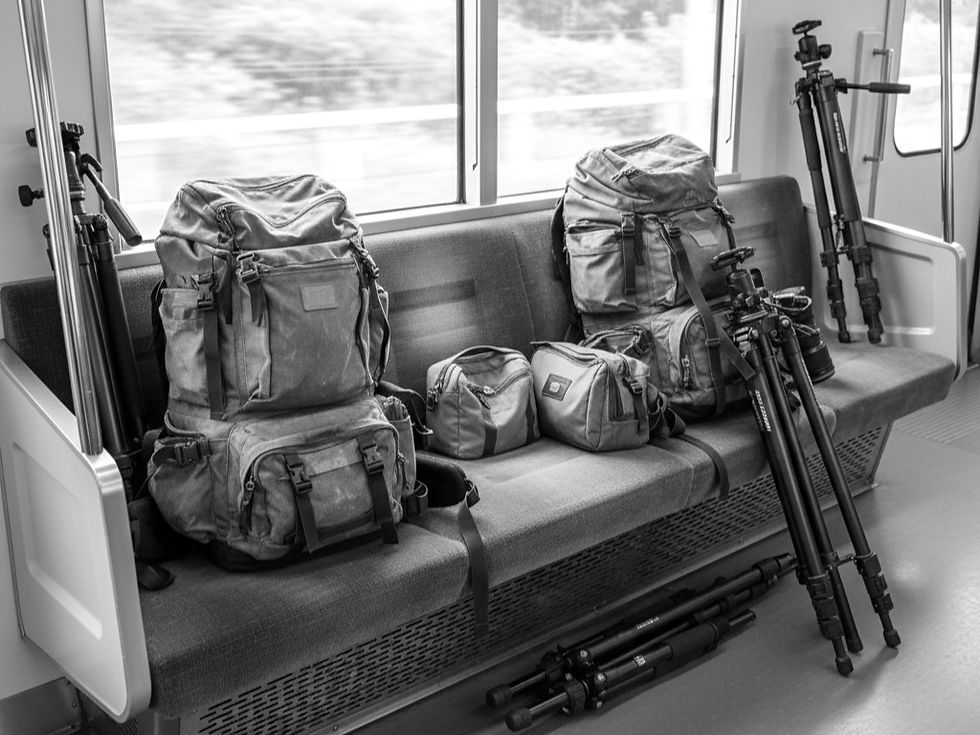
Photo Equipment: Backpacks and Tripods
As I mentioned earlier, once you board public transportation, backpacks should be worn on your front. This prevents you from accidentally bumping into someone. It’s a widely followed rule, especially among students, who often commute by train with enormous backpacks during rush-hours. I always wonder what they could possibly be carrying!
As for tripods, they must be transported in protective cases. Not to protect your precious equipment, but rather to avoid accidentally hitting someone or dirtying their clothes (which can easily happen if your tripod isn’t clean).

Umbrella Symphony: Shake, Fold, Store
One of the things that surprised me most when I first arrived in Japan is how much the Japanese dislike getting wet in the rain. It’s almost a national aversion! As a photographer, my only concern with rain is usually protecting my gear. But in Japan, staying dry is an art form. At the slightest drizzle, hundreds of umbrellas bloom across the streets, transforming sidewalks into a sea of canopies.
Japanese umbrellas are a marvel of practicality: affordable, often transparent (perfect for photography!), and remarkably sturdy. It would be a shame not to take advantage of them. However, entering a shop or restaurant with a wet umbrella is a different story. No one wants to trail water droplets through the aisles, so you’ll need to leave your umbrella in the designated racks at the entrance or use a plastic sleeve to keep it dry while you shop.
Yes, there’s a (slight) risk you might not find your exact umbrella when you leave. They all look alike, and mix-ups happen. In that case, there’s no choice but to pick one from the remaining umbrellas. Not the most elegant solution, but it’s the custom.
When in Japan, do as the Japanese do!

Escalator: Stand Left, Walk Right
On escalators in Japan, which side to stand on depends on the city. It’s not consistent nationwide. In Osaka, for example, people stand on the right, while in Tokyo, it’s often the left. So unless you’re the first one on, just follow the crowd, and everything will go smoothly. This simple act is yet another example of the Japanese talent for respecting rules and queuing in perfect order, even in long lines.
And if you’re carrying bags or luggage, be mindful of those in a hurry who are climbing the steps at full speed. Avoid blocking their path, keep your belongings close and stay in your lane.

Bicycles: The Chaos on Two Wheels
Bicycles in Japan are absolutely everywhere. People of all ages love cycling, using bikes daily to commute, run errands, or pick up children from school. Mothers often have special models that can carry up to three children at once! Needless to say, many recent models are electric. Yet, regardless of the type, cycling is part of their daily routine, helping them stay in shape.
As a result, navigating sidewalks can be tricky, because cyclists do ride on them! While it’s not forbidden, pedestrians technically have absolute priority. However, as a pedestrian myself, I often wonder who actually has the right of way. I often think a little more civic awareness or regulations would be welcome. Paradoxically, there aren’t many accidents to report, but given their sometimes excessive speed, I wouldn’t wish a bike to the face on anyone.
That said, renting a bike as a tourist is a fantastic way to explore cities and avoid crowded public transport. Bike rentals are very affordable, so don’t hesitate to give it a try. Just be prepared to join the joyful chaos!
Ride peacefully on the sidewalks, helmet-free, slaloming between pedestrians, or even cycle the wrong way up one-way streets like a true local. But whatever you do, don’t park your bike just anywhere, because that’s forbidden! You’ll need to use the dedicated (and often paid) bike parking lots, if you can even find a free spot… Yes, in Japan, there’s always a paid solution to even the simplest problems.

6. Photography & Approach

Temples and Shrines: Capture the Spirit, Not Just the Scene
A temple or shrine is not just a picturesque location. It is a sacred place to honor. Even for non-believers, respect is mandatory. As photographers, we carry a double responsibility: to honor the place both with our behavior and with our eyes.
Before you even think about taking a photo, pause and observe. Let the atmosphere sink in, and show reverence for the space you’re in. Purify your hands and mouth at the Temizu (water pavilion) before approaching the main hall. It’s a gesture of cleansing, both physically and spiritually.
When photographing a shrine or altar, bow slightly as a sign of respect before raising your camera. And never pose in front of a sacred object. It is neither a prop, nor a backdrop for your portrait. These places are steeped in meaning, and our role as photographers is to capture their essence with humility.

Photography Rules: When in Doubt, Ask
Photographing indoor temple statues is often prohibited. This restriction also applies to ceremonies, whether they are part of cultural traditions or private family rituals. These moments are sacred, and capturing them without permission is seen as a violation of their sanctity.
Drones are also strongly frowned upon in Japan. As always, safety is the primary concern, but the issue goes beyond that. Flying a drone in Japan (like in many countries) requires a license and registration of the device with authorities. The noise and presence of drones in the sky, especially near residential areas, temples, or protected natural sites, are considered disruptive and disrespectful.
If you’re eager to film Japan from above, I strongly recommend researching the legal and cultural restrictions beforehand.
For my part, drones are forbidden during our Photo Tours.
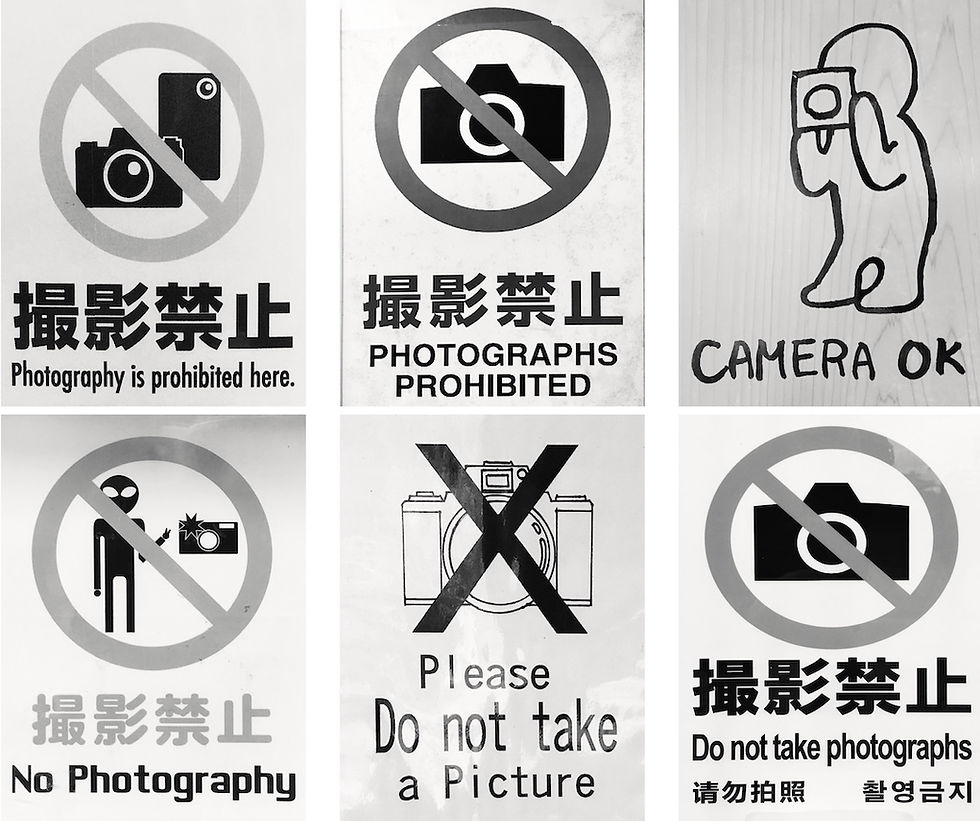
Tripods: Discretion is Key
More and more temples are banning the use of tripods and other equipment (monopods, selfie sticks, etc.). This is especially true in cities like Kyoto, where the misuse and inappropriate behavior of many photographers have forced temples to take action.
If no restrictions are posted (and they are usually clearly visible), you may use your tripod. However, temples are not photo studios, regardless of a photographer’s specialty. Staying discreet, not blocking pathways, and prioritizing other visitors are basic rules of common courtesy. Additionally, tripods are not allowed in halls or on tatami mats for obvious reasons of cleanliness and to prevent damage.

That said, while Japan is a country with strict rules that are not to be broken, special permissions can sometimes be obtained. In my case, I’m delighted to secure these exceptions for our clients during our tours.
As a general rule, I discourage using a tripod in temples. Unless you’re focusing on a specific one where you plan to shoot long exposures, it’s easier and often more creative to explore these extraordinary places hand-held.

Model Releases: Consent is Non-Negotiable
Here’s another sensitive topic that may upset some eager photographers. It is considered extremely impolite to photograph locals on the street without their consent. Maiko and Geisha, for example, are not street performers for tourist entertainment. They are professionals who simply want to move peacefully through their own neighborhoods. Do not treat them like attractions.
If you want to take a photo, ask politely. But expect a "no" most of the time.
The same applies to Buddhist monks and Shinto priests, whether they are in the middle of a ceremony or simply going about their day. During our tours in Koyasan or on Shikoku Island, we often encounter monks engaged in their daily routines. We learn to incorporate them discreetly into the landscape (without showing their faces) and without disrupting their activities.

Golden Hours: For Crowd-Free Shots
The best light, and the fewest people, are often at sunrise and sunset. These golden hours offer soft, diffused lighting that enhances textures, colors, and mood, making them ideal for photography. If you’re into color photography, the warm tones of Japanese dawn and dusk can add depth and emotion to your shots, whether you’re capturing landscapes, architecture, or candid moments.
Use these times to capture serene, respectful images that reflect the tranquility of the scene. And keep the noise down since early mornings are sacred in Japan, wrapped in a quiet, almost meditative atmosphere. This stillness not only allows for uninterrupted shooting but also adds a spiritual layer to your photography, connecting your work to the cultural reverence for peace and mindfulness.
You’ve made it to the end, congratulations!
The Final Word
Armed with these tips, you’re now ready to explore Japan with confidence, respect, and a deep appreciation for its unique culture. By following these guidelines, you’ll not only avoid awkward moments but also earn smiles, nods, and maybe even a few new friends along the way.
Japan is a country where tradition and modernity coexist in harmony, and your respect for its customs will make your trip smoother, richer, and more meaningful. So go ahead, dive into the adventure, embrace the local way of life, and let the beauty of Japan unfold before you. Safe travels, and may your journey be as seamless as the bullet trains that zip across the land!

Join us for a Photo Tour where you’ll discover timeless beauty, immerse yourself in local culture, and uncover hidden photographic gems. We explore Japan’s contrasts, tradition and modernity, serenity and energy, nature and urban pulse… If these dualities inspire you, see the programme here.


