


Japan: The Gassho-Zukuri Houses, Living Legacy of Rural Past
- Olivier
- Feb 21
- 8 min read
Updated: Mar 17
For photographers and cultural enthusiasts, these houses offer a rare glimpse into a way of life that has remained largely unchanged for centuries. Whether blanketed in snow or surrounded by the lush greenery of summer, the Gasshō-Zukuri villages stand as a testament to the ingenuity of Japan’s rural communities.
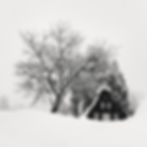
The Gasshō-Zukuri (合掌造り) houses are among Japan’s most iconic and ingenious architectural achievements. Their name, “Gasshō-Zukuri”, translates to “constructed like hands in prayer”, a reference to the steep, triangular thatched roofs that resemble the joined hands of Buddhist monks during prayer.
Many Gasshō-Zukuri houses have been converted into museums, guesthouses, and restaurants, allowing visitors to step back in time and experience the region’s rich history firsthand. Staying overnight in a Gasshō-Zukuri farmhouse is a unique opportunity to immerse oneself in the traditions and hospitality of rural Japan. An experience that we are happy to offer in our Photo Tours.
Of course, as a photographer, I find these remarkable structures most photogenic in winter. The natural contrast between their dark tones and the snow makes them ideal subjects for minimalist photography. That’s why I’ve always visited these regions during the winter season.
However, I’ve long been considering a summer visit to better understand how they interact with their surroundings in a different season. But, for the moment, let’s dive into the deep winter of a beautiful region where time seems to have stood still...
Origins of Gasshō-Zukuri
Their distinctive design emerged during the Edo period (1603-1868), primarily in the remote mountain villages of the Hokuriku region, particularly in what are now Gifu and Toyama Prefectures.
The origins of these houses are deeply tied to the region’s harsh climate. The Hokuriku region experiences some of the heaviest snowfall in the world, with annual accumulations reaching up to 11 meters. The steep roofs, angled between 60 and 70 degrees, were engineered to prevent snow from accumulating, allowing it to slide off easily and protecting the structure.

Interior Organization
Gasshō-Zukuri houses were not only family homes. They were multi-functional spaces designed to support both domestic life and local industries. The ground floor typically served as the living area, centered around an "Irori" (囲炉裏), a sunken hearth used for cooking and heating. This central hearth was the heart of family and community gatherings, where stories were shared and meals prepared.

Iwase Family Residence (see below). © O. Robert
Above the living area, the vast attic spaces were used for sericulture (see below) a major industry in the region. The upper floors were divided into multiple levels to maximize space for silkworm beds and the storage of mulberry leaves, their primary food source. The smoke from the Irori also played a crucial role, helping to preserve the thatched roof and the ropes that held the structure together.

In addition to sericulture, some houses were used for the production of nitre, a key ingredient in gunpowder, in the areas below the ground floor. This dual-purpose design reflects the resourcefulness of the villagers, who made the most of limited space and materials.

Architectural Ingenuity
What makes Gasshō-Zukuri houses truly remarkable is their construction. Built without nails, these structures relied on intricate wooden joinery and hemp ropes to hold everything together. The structural system called "Sasu*" eliminated the need for vertical roof supports, creating large, unobstructed interior spaces. This flexibility also made the houses resilient to earthquakes, a common hazard in Japan.
*Sasu (さす) refers to a traditional wooden joinery technique. It is part of the structural system used in these houses, where wooden beams and supports are interlocked without the use of nails. The Sasu system specifically involves diagonal bracing or trusses that help distribute the weight of the steep thatched roofs and provide stability against heavy snow and earthquakes.

The houses were oriented north-south to minimize wind resistance and maximize solar exposure, further demonstrating the villagers’ deep understanding of their environment. The use of local materials like wood, thatch, and rope, ensured that the houses were both sustainable and perfectly adapted to their surroundings.

The Sericulture
The sericulture process, central to the Gasshō-Zukuri houses, involved the cultivation of silkworms to produce raw silk. Villagers raised silkworms in the spacious upper floors of their homes, where temperature and humidity could be carefully controlled. The process began with the hatching of silkworm eggs, followed by feeding the larvae mulberry leaves (abundant in the region) until they spun cocoons. These cocoons were then harvested, boiled to kill the pupae, and unwound to extract the silk threads.

This labor-intensive process required constant attention, as silkworms needed to be fed every few hours. The silk produced was highly valued and often sold to merchants, providing a crucial source of income for rural families. The Gasshō-Zukuri houses’ multi-level design was ideal for sericulture, allowing families to maximize space for both living and silk production.
This industry thrived from the Edo period until the early 20th century, when modern production methods gradually replaced traditional practices

Where to Find Gasshō-Zukuri Houses
The most famous Gasshō-Zukuri villages are located in the Shogawa River valley, straddling Gifu and Toyama prefectures. These villages are now UNESCO World Heritage Sites, recognized for their cultural and historical significance.
Here are some significant examples that I have had the pleasure of visiting and/or photographing:
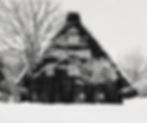
Ogimachi (Shirakawa-go, Gifu): The largest and most visited village, with 59 Gasshō-Zukuri houses. Ogimachi is known for its picturesque winter illuminations and offers numerous Minshuku (family-run lodgings) where visitors can experience traditional hospitality.
I mention this example first because it is by far the most famous worldwide. However, its extremely touristy nature makes it far from ideal for photography. Moreover, it’s not even the snowiest village in the region. If you’re short on time during your visit to the region, don’t hesitate to skip Shirakawa-go and head straight for the Gokayama villages instead (below).
© O. Robert
Suganuma (Gokayama, Toyama): A smaller village with 9 Gassho-Zukuri houses, offering a quieter but equally authentic experience. The village is known for its well-preserved houses and a museum that provides insight into the daily life of its former inhabitants.

© O. Robert
Ainokura (Gokayama, Toyama): The most remote and largest village in Gokayama, with 20 Gasshō-Zukuri houses. Ainokura is less crowded than Ogimachi and offers a more secluded atmosphere, making it ideal for those seeking a deeper connection to the past.

Hida no Sato (Takayama, Gifu): The museum-oriented site showcases over 30 traditional houses from the Hida region, including thatched and shingled farmhouses, some of which are up to 200 years old. Four of these buildings are designated as National Important Cultural Properties, and several others are recognized as Prefectural or City Important Cultural Properties. Many of these houses were relocated and restored to preserve their historical value.

© O. Robert
Miyama (Kyoto Prefecture): While not as famous as Shirakawa-go or Gokayama, Miyama is home to a collection of thatched-roof houses, including some Gasshō-Zukuri styles. The village is known for its traditional Kayabuki (thatched-roof) houses, with roofs slightly less steep than those of Gasshō-Zukuri, and offers a peaceful retreat into rural Japan.

The Iwase Family Residence
The Iwase Family Residence in Nanto, Toyama Prefecture, is the largest surviving Gasshō-style house in Japan, built in the mid-18th century over eight years. It is a five-story structure, constructed entirely of zelkova timber, and is renowned for its massive scale and traditional architectural beauty.

Iwase Family Residence. © O. Robert
The house reflects the wealth and influence of the Iwase family, who played a significant role in supplying nitre (mentioned above) to the Kaga clan during the Edo period. The residence also served as government housing for officials, underscoring its historical importance.
The Iwase Residence offers a rare glimpse into the lifestyle of a powerful merchant family and the craftsmanship of the era.

For those deeply interested in the history and architecture of these traditional houses, this residence is an absolute must-visit. Not only for the unique character of its structure, but also for the passion its owners share with visitors.
Through my conversations with them about the organization of the house’s interior, I gained a real sense of the challenge involved in preserving this living heritage. The recent roof restoration, for example, cost nearly $250,000 for just one section.

© O. Robert
The restoration work took almost two years and required the laying of nearly 10,000 bundles of thatch. Fortunately, since the residence is designated a National Important Cultural Property, the Japanese government covered 90% of the expenses. Of course, the current owners no longer live on the premises. Instead, they manage the residence as a living museum, bringing its history to life through a variety of events and activities.
It is worth mentioning this unique example of Gasshō-Zukuri for its remarkably preserved architectural quality, which is matched only by the kindness of its owners. The visit by Japan’s current Emperor Naruhito, when he was still a prince, further underscores its significance. A visit from a member of the imperial family is, of course, an exceptional honor that enhances the cultural value of such historic sites.

The Final Word
In the hush of a Gasshō-Zukuri’s shadow, monochrome photography becomes a conversation with the past. Stripped of color, the image distills life to its essence: light, texture, and the silent dialogue between wood, paper, and stone.
Japan’s cultural and historical values are not preserved in museums alone. They live in the daily rhythm of these spaces, in the way light spills across a tatami mat or how mist lingers over moss-covered stones. Minimalism, here, is not absence but reverence. It is a choice to focus on what truly matters.
To photograph these houses in black and white is to embrace the soul of wabi-sabi: the beauty of imperfection, the grace of aging, the quiet dignity of things as they are. It is a reminder that history is not just recorded in books, but in the cracks of a wall, the grain of a wooden beam, the stillness of a courtyard under snowfall... Subtle details that monochrome photography reveals with unmatched beauty.