


Japan: Daruma, the Mystical Charm of Good Fortune Dolls

Updated: Apr 25
Daruma dolls (達磨), resilient symbols of Bodhidharma, the legendary founder of Zen Buddhism, embody Japan’s spirit of perseverance. Originally crafted from papier-mâché, their blank-eyed, self-righting forms inspire hope and determination. These votive objects now grace temples, festivals, and homes. Their ritual use reflects a timeless cycle of aspiration and renewal.

© O. Robert
Daruma dolls as we know them today trace their roots back to the 17th century in the Takasaki region of Gunma Prefecture. Local farmers are said to have crafted these dolls as talismans for a good harvest. Over time, they grew in popularity throughout Japan.
From quiet temple shelves to bustling festival stalls, Japan’s Daruma dolls stand as vibrant symbols of resilience. Born from the legend of Bodhidharma’s unyielding meditation and the humble craftsmanship of Edo-era farmers, these papier-mâché (paper mache) talismans have evolved into icons of perseverance, bridging spiritual tradition and everyday aspiration.
Whether painted red for fortune or green for academic success, each Daruma carries a wish, a goal, and a story, its blank eyes awaiting the fulfillment of dreams. Beyond their spiritual roots, these dolls weave through Japan’s cultural tapestry. From Kyoto’s hidden temples to Gunma’s lively markets, they invite both locals and travelers to partake in rituals of hope and renewal.
© O. Robert
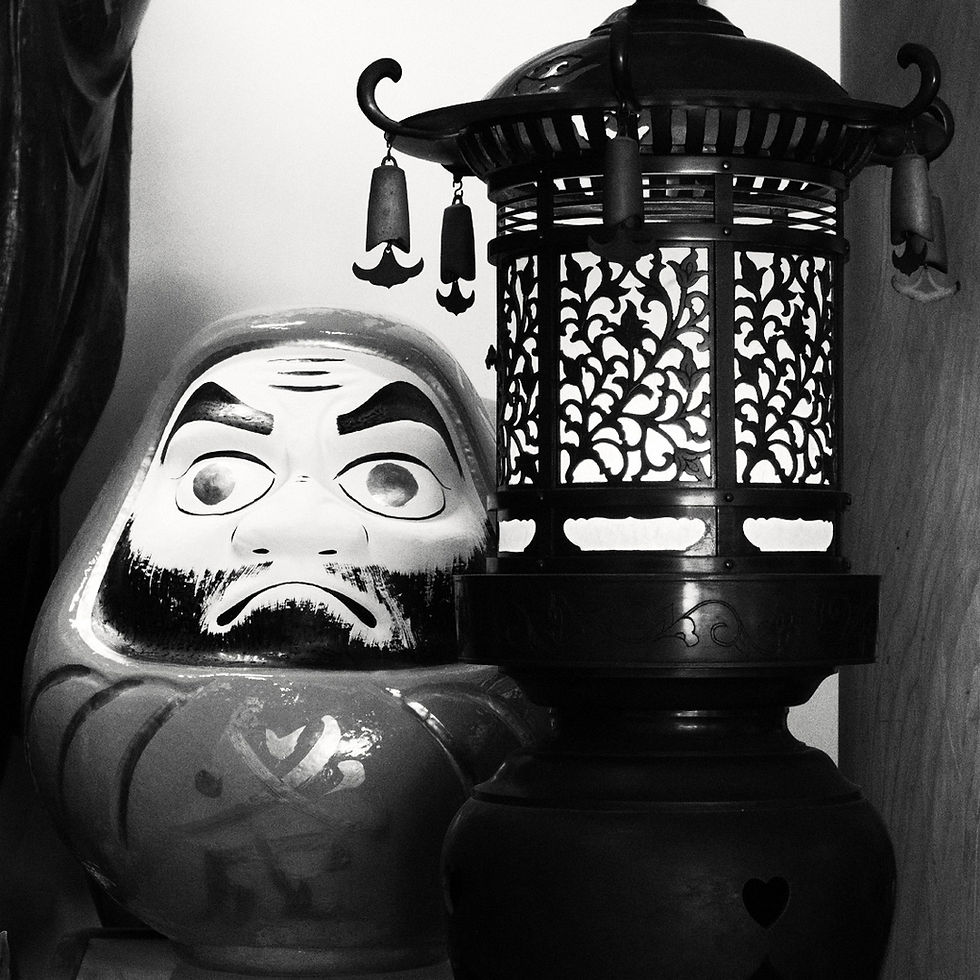
When someone buys a Daruma doll, they draw one pupil while making a wish or setting a goal. Once the wish comes true or the goal is achieved, the second pupil is added. The doll’s rounded shape, which allows it to return upright when tipped over, symbolizes resilience and the ability to rise again after hardships.
At the end of the year, Daruma that have fulfilled their purpose are often burned in temples during special ceremonies called Daruma kuyō, symbolizing gratitude and the release of spirits.
Let’s take a look (or rather, an eye) at their history, symbolism, and presence in Japanese society.

Origin of the Name Daruma
The name Daruma (達磨) comes from Bodhidharma (Daruma-daishi, in Japanese), the Indian Buddhist monk who lived in the 6th century and is credited as the founder of Zen Buddhism. He is often depicted as a monk with a thick beard, a meditative seated posture, and a determined gaze. He arrived in China from India in 527.
After his encounter with Emperor Wu of the Liang Dynasty (where, according to legend, the emperor did not understand Bodhidharma’s teachings), Bodhidharma is traditionally said to have traveled north to the Shaolin Temple in Songshan, Henan Province. There, he is credited with introducing Zen Buddhism and martial arts traditions that later evolved into Shaolin Kung Fu.

© O. Robert
Daruma dolls are inspired by Bodhidharma because of his legend tied to perseverance and resilience. According to tradition, Bodhidharma meditated so intensely (facing a wall for 9 years) that he eventually lost the use of his arms. This symbolic legend represents the ability to rise again after personal hardships.
The name Daruma derives from the Japanese “Tatsu Ma” (達磨). In Japanese, Tatsu (達) means “to reach” or “to achieve”, and Ma (磨) means “to polish” or “to refine”. Together, these characters reflect the idea of spiritual attainment and self-perfection, closely linked to Bodhidharma’s meditative practice.

© O. Robert
The Self-Righting Daruma Movement
The self-righting Daruma doll, famously represented at Daruma-dera (Hōrinji Temple) in Kyoto, embodies a profound symbol of perseverance and resilience. The doll’s unique design (a rounded, weighted base), allows it to always return to an upright position after being tipped over. This movement reflects the Zen Buddhist principle of overcoming adversity and maintaining inner strength.
The self-righting movement also traces its origins to earlier Japanese toys like the "okiagari-kobōshi", a self-righting monk doll popular in the Kinki region during the 17th century. At Hōrinji Temple (more details below), the Daruma dolls are not only spiritual symbols but also a testament to the enduring human spirit, inspiring visitors to persevere through life’s challenges.

Nanakorobi-Yaoki
Nanakorobi-Yaoki (七転び八起き) is a traditional Japanese proverb that translates to "fall down seven times, stand up eight". It embodies the spirit of resilience, perseverance, and determination in the face of adversity (ups and downs in life). The phrase is often associated with the Daruma doll, which always returns to an upright position when knocked over, symbolizing the ability to recover from setbacks and continue moving forward.
This philosophy is deeply rooted in Japanese culture, encouraging people to remain steadfast and optimistic, no matter how many times they encounter failure or hardship. It reflects the value placed on persistence and the belief that success comes from getting back up after every fall.

© O. Robert
History of Daruma Dolls
Daruma Dolls, emblems of perseverance and good fortune, have a rich history spanning several periods of Japanese history.
Their origin dates back to the Edo period (1603-1868) in the Takasaki region of Gunma Prefecture. Farmers created them to ensure good harvests, drawing inspiration from Bodhidharma, renowned for his intense meditation and resilience.
During the Meiji era (1868-1912), as Japan opened to the West and underwent major socio-economic transformations, Daruma evolved into symbols of modernization and individual success. Their popularity spread beyond Buddhist temples to include commercial and social events.

Fusuma painting, Hōrinji Temple © O. Robert
In the Taishō era (1912-1926) and the Shōwa era (1926-1989), Daruma dolls became increasingly popular with the general public. They came to be seen as lucky charms, commonly used to mark personal and professional goals. Daruma were integrated into festivals and local celebrations, especially for the New Year.
In the Heisei era (1989-2019) and into the current Reiwa era (2019-present), Daruma remain a powerful symbol of resilience and determination. Their artisanal production continues, and they are still present in homes, businesses, and temples across Japan. Daruma thus embody a living tradition, linking generations and historical periods of Japan.

Where to Find Daruma
Daruma dolls can be found in many places across Japan, from temples to festivals and markets. Here are some of the main locations and contexts where they are commonly found:
1. In Temples (more details below)
Shorinzan Darumaji Temple, Takasaki, Gunma Prefecture
Considered the birthplace of modern Daruma dolls.
The annual Daruma-ichi Festival in January attracts thousands of visitors who come to purchase Daruma dolls and participate in blessing ceremonies.
A vast collection of Daruma, including historical examples.
Katsuoji Temple, Minoo, Osaka Prefecture
A sacred place for those seeking luck and success.
Thousands of Daruma dolls left by grateful visitors who have achieved their goals.
A picturesque setting with Daruma dolls of different sizes scattered around the temple.

Katsuoji Temple © O. Robert
Hōrinji Daruma-dera Temple, Kyoto, Kyoto Prefecture
Dedicated to Bodhidharma, this temple houses an extensive collection.
Daruma dolls of various sizes and styles, representing different historical periods.
Visitors come to pray for perseverance and the fulfillment of their wishes.

Hōrinji Temple © O. Robert
2. At Festivals (more details below)
Daruma Matsuri (Takasaki, Gunma Prefecture): Held every January, this fair attracts thousands of visitors who come to buy Daruma dolls and take part in ceremonies where the previous year’s dolls are burned.
Jindaiji Daruma Fair (Chofu, Tokyo Prefecture): This annual festival, held in March, is one of the largest Daruma markets in the Kanto region.

3. At Shops and Markets
Souvenir shops: Daruma dolls are sold in souvenir shops across Japan, especially in tourist areas.
Local markets: Local markets and craft fairs often feature Daruma dolls handmade by local artisans.
Though traditional, Daruma dolls remain a vibrant and dynamic presence in contemporary Japanese culture. As such, they continue to be deeply integrated into many aspects of daily and spiritual life.

© O. Robert
Styles of Daruma
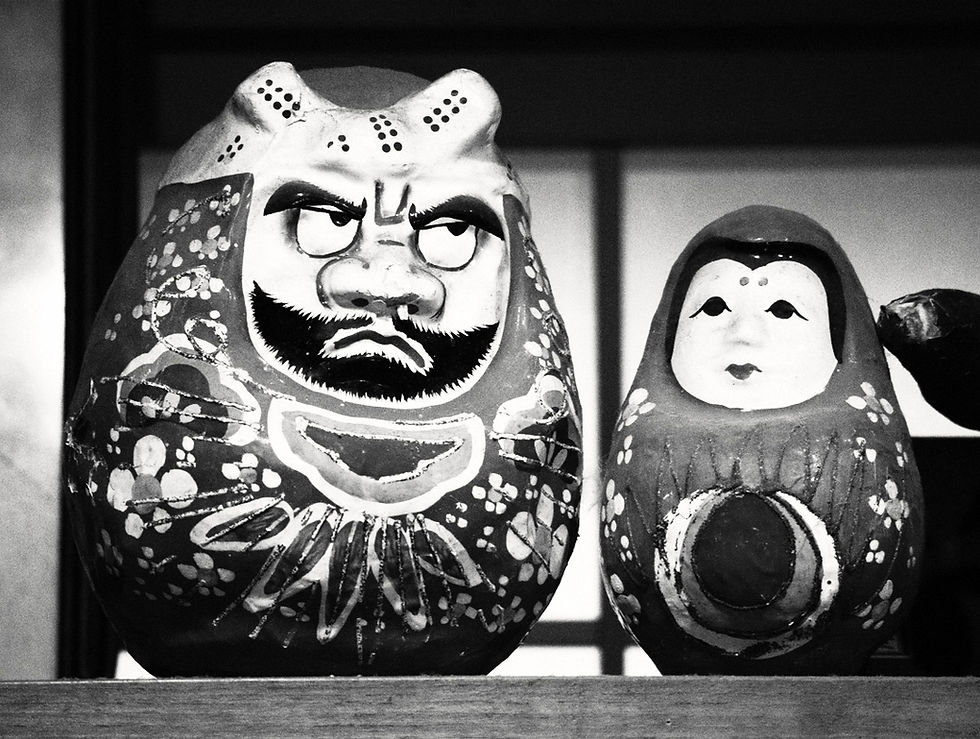
There are many styles of Daruma, each with distinctive features in terms of design, color, and meaning, depending on the region where they are produced. Here are some of the most notable styles:
Takasaki Daruma (Traditional Daruma)
Origin: Takasaki, Gunma Prefecture
Characteristics: Made of papier-mâché, traditionally red with a white face. The traditional Daruma has crane-shaped eyebrows and tortoise-shaped mustaches, symbols of longevity.
Meaning: Good fortune and resilience.
Shorinzan Daruma
Origin: Shorinzan Darumaji Temple in Takasaki, Gunma Prefecture
Characteristics: Similar to traditional Daruma, but often crafted with more elaborate details and blessed at the temple.
Meaning: Mainly used for wishes and prayers.

Collection of old Daruma, Hōrinji Temple © O. Robert
Mizuki Daruma
Origin: Fukuoka Prefecture
Characteristics: Often more colorful and decorated with local motifs.
Meaning: Good fortune and protection against illness.
Miharu Daruma
Origin: Fukushima Prefecture
Characteristics: Recognizable by its large pupils and simplified patterns.
Meaning: Good luck and success.
Hakata Daruma
Origin: Fukuoka Prefecture
Characteristics: Smaller in size and often painted in bright colors, including red, blue, and yellow.
Meaning: Commonly used for specific prayers such as family safety and academic success.

Iwako Daruma
Origin: Nagano Prefecture
Characteristics: Made of wood and often painted with more modern and artistic designs.
Meaning: Adapted to modern tastes while preserving the traditional meanings of luck and perseverance.
Kokeshi Daruma
Origin: Miyagi Prefecture
Characteristics: A blend of some different styles above, with a more elongated shape.
Meaning: Often used as decoration and for good luck.

© O. Robert
Specific Colors and Their Meanings
Red: Good fortune and protection against evil.
Yellow: Safety and good health.
Green: Academic success.
Black: Protection against bad luck.
White: Harmony and love.
Gold and Silver: Prosperity and wealth.
Each region may have its own variations and specific meanings, reflecting Japan’s cultural diversity and local traditions. Despite these variations, Daruma dolls remain a universal symbol of perseverance and good fortune for the believers.
© O. Robert
Temples Famous for Their Daruma Collections
Several temples in Japan are renowned for their collections of Daruma dolls and their unique festivals. These temples also provide unique cultural and spiritual experiences, attracting visitors from all over Japan and the world. Here are some of the most interesting ones (a personal selection):
Katsuoji Temple (Minoo, Osaka Prefecture)
Katsuoji Temple, nestled in the serene hills of Minoo just outside Osaka, is renowned as a sacred site for acquiring Daruma dolls. The temple’s bustling Daruma-ichi market, held annually in early spring, attracts visitors eager to purchase their dolls. Beyond its spiritual significance, Katsuoji offers a tranquil retreat with lush greenery and historic architecture, making it a perfect blend of cultural tradition and natural beauty.
Unfortunately, the exaggerated portrayal of this temple on social media lends it more of a theme park atmosphere than that of a place of worship, especially given its affiliation with the Shingon school of Buddhism. It’s a stark contrast for those familiar with the quiet serenity found in many Shingon temples across Japan. The situation feels deeply contradictory. Nowadays, you must appreciate this temple of great historical interest surrounded by hundreds of tourists, mainly interested in taking selfies.

Katsuoji Temple © O. Robert
A few years ago, Katsuoji faced significant financial difficulties that nearly drove it to bankruptcy. At one point, there was even talk of permanently closing the temple. The shift toward tourism apparently proved to be a successful strategy, though it came at the expense of authenticity.
Now, you must pass through a large entrance shop that also serves as a ticket counter to purchase your entry ticket. After going through turnstiles and proving to the guard that you’ve paid for admission, you can finally enter the temple, where miniature Daruma dolls decorate every nook and cranny. Some may appreciate this, but the atmosphere feels more like an amusement space than a Shingon Buddhist temple. Personally, I regret this transformation. I’ve never found here the typical energy of temples belonging to this Buddhist tradition.

Hōrinji Temple © O. Robert
Hōrinji Daruma-dera Temple (Kyoto, Kyoto Prefecture)
Hōrinji (also referred to as Daruma-dera) is a hidden gem celebrated for its deep connection to Daruma dolls. This historic temple, nestled in a quiet corner of Kyoto, is small but boasts an impressive collection of Daruma. Several halls are dedicated to them, where visitors can discover very old Daruma of various shapes and colors, tucked away on dusty shelves (photos above).
It’s an absolute charm that you must experience, sheltered from the mass tourism that unfortunately overwhelms other temples, such as Katsuoji. Hōrinji is also famous for its Kuyō ceremony, held during Setsubun.
What is Setsubun?
Setsubun is a traditional festival marking the beginning of spring, celebrated annually on February 3. Rooted in ancient rituals to purify the home and ward off evil spirits, it’s best known for the mame-maki (bean-throwing) ceremony, where roasted soybeans are scattered to drive away misfortune.
Families and temples participate, with someone often dressed as an oni (demon) to symbolize the banished evil. Eating the same number of beans as one’s age is believed to bring good health for the year. This lively event blends Shinto and Buddhist customs, celebrating renewal and the arrival of warmer days.

Toidaruma-dera Temple (Izu, Shizuoka Prefecture)
This temple is renowned for its unique connection to Daruma dolls. The temple’s main hall features Japan’s largest seated Daruma-daishi statue, standing 5 meters tall. Visitors can recite the chant “Namu-Damo-Sowa-Ka” 3 times and attach a good-luck tally with their wish written on it to a Daruma doll, in the belief that their wish will come true.
Shorinzan Darumaji Temple (Takasaki, Gunma Prefecture)
This temple stands as the spiritual heart of Daruma culture, famously known as the birthplace of the Daruma. This vibrant temple, bustling with visitors year-round, offers a vast array of Daruma in all sizes and often purchased for New Year blessings or personal milestones.
The temple’s lively atmosphere, filled with the scent of incense and the sound of prayers, is complemented by its striking architecture and the nearby Daruma Market, where artisans showcase their craft.
Jindaiji Temple (Chofu, Tokyo Prefecture)
This temple is one of the city’s oldest and most revered sites for acquiring Daruma dolls, steeped in over a thousand years of history. Known for its tranquil, forested surroundings and traditional charm, the temple hosts a lively Daruma market where visitors can purchase these symbolic dolls.
Beyond its spiritual allure, Jindaiji offers a serene escape with its ancient gates, beautiful gardens, and the soothing sound of temple bells. It’s a perfect destination for those seeking both cultural enrichment and a moment of peaceful reflection in Tokyo.

© O. Robert
Dairyuji Temple (Gifu, Gifu Prefecture)
This temple is a cherished destination for Daruma enthusiasts, celebrated for its deep-rooted connection to these iconic symbols of resilience and good fortune. The temple, nestled in the scenic landscapes of Gifu, offers a unique opportunity to purchase Daruma dolls, each meticulously crafted and imbued with spiritual significance.
Its serene atmosphere, framed by traditional architecture and lush greenery, invites visitors to explore both the cultural heritage and the tranquil beauty of the region.

© O. Robert
Famous Festivals Associated with Daruma
Several festivals in Japan are linked to Daruma dolls, celebrating their symbolism of perseverance and good fortune. These festivals are great opportunities to acquire Daruma dolls. They are also moments of prayer, gratitude, and community celebration, strengthening the cultural and spiritual bonds of this Japanese tradition. Here are some of the most famous:
Daruma Ichi (Daruma Market) in Takasaki
Shorinzan Darumaji Temple, Takasaki, Gunma Prefecture
Typically around January 6-7
One of Japan’s largest and oldest Daruma markets. Thousands of Daruma dolls are sold, and visitors can take part in blessing ceremonies for good fortune in the new year.
Daruma Kuyō at Nishiarai Daishi
Nishiarai Daishi Temple, Tokyo
February 3 (Setsubun)
Daruma dolls that fulfilled their purpose in the previous year are brought to the temple to be burned in a special ceremony, symbolizing gratitude and spiritual renewal.

Jindaiji Daruma Ichi
Jindaiji Temple, Chofu, Tokyo
March 3-4
One of the largest Daruma markets in the Kanto region. Visitors can purchase Daruma dolls of all sizes and participate in purification and blessing ceremonies.
Daruma Matsuri at Katsuoji
Katsuoji Temple, Minoo, Osaka Prefecture
November 18
This festival celebrates perseverance and good fortune. Visitors buy Daruma dolls and join ceremonies to pray for the success of their goals.
Shorinzan Nanakusa Taisai Daruma Ichi
Shorinzan Darumaji Temple, Takasaki, Gunma Prefecture
January 6-7
Also known as the "Festival of Seven Herbs," this event invites visitors to pray for health and good fortune by purchasing Daruma dolls.

© O. Robert
Hatsuka Ebisu at Imamiya Ebisu Shrine
Imamiya Ebisu Shrine, Osaka
January 9-11
Primarily a festival for business prosperity, many vendors offer Daruma dolls for luck and success in business.
Daruma Kuyō at Shorinzan
Shorinzan Temple, Takasaki, Gunma Prefecture
January 14
Daruma dolls from the previous year are burned in a bonfire to thank the deities and purify the soul before purchasing new Daruma dolls.

© O. Robert
The Ritual and Use of Daruma Dolls
The traditional ritual surrounding the purchase and use of a Daruma doll is a symbolic and spiritual process involving several steps. Here’s the typical progression of this ritual:
Choosing and Purchasing the Daruma
As mentioned earlier, Daruma dolls can be purchased at temples, fairs, local markets, or souvenir shops.
Daruma dolls come in various sizes and colors. While red is traditional, other colors may be chosen based on their specific meanings.
Making a Wish or Setting a Goal
This can be done immediately after purchase or during a quiet, reflective moment at home.
Think of a specific wish or goal you want to achieve, such as passing an exam, earning a promotion, or regaining health.

© O. Robert
Painting the First Eye
Paint the first pupil in the Daruma’s left eye (the right eye from the observer’s perspective) while mentally or verbally stating your wish.
The empty eye represents the beginning of your journey toward achieving your goal.
Which eye to paint?
As mentioned, in the vast majority of cases, the left eye of the Daruma is painted first. However, there are exceptions to this tradition.
In the political world, where Daruma dolls are especially popular, it is customary to paint the right eye first, often in anticipation of elections, for example. Additionally, in rare cases, certain temples may follow different traditions where both eyes are painted at the time of making the wish. Some students also paint the right eye first, like politicians, before exams. That said, if you plan to purchase a Daruma, it is safest to paint the left eye first to honor the most widely accepted tradition.
Placing the Daruma
Place the Daruma in a visible spot at home or at work. It serves as a constant reminder of your goal and your commitment to achieving it.
Treat the Daruma with respect, as it embodies your wish and perseverance.
Actively work toward fulfilling your wish. The Daruma is there to motivate you and remind you of your determination.

Achieving the Wish
Once your wish or goal is fulfilled, paint the second pupil in the Daruma’s right eye (the left eye from the observer’s perspective).
Completing both eyes symbolizes the fulfillment of your goal and the balance achieved.
Giving Thanks and Burning the Daruma
At the end of the year or once the goal is achieved, it is customary to return the Daruma to the temple where it was purchased (or to another temple) for the Daruma Kuyō (burning ceremony).
The Daruma is burned by the monks during a dedicated ceremony to thank the spirits and release its energy. This act closes the cycle of your wish.
Buying a New Daruma
If you have a new goal or wish, you can purchase a new Daruma and repeat the ritual as often as desired.
This ritual is deeply rooted in Japanese culture, symbolizing determination and gratitude. It is honored by millions of people seeking to achieve their personal and spiritual goals. I invite you to discover this fascinating tradition during your travels in Japan. You’ll step into the intriguing world of temples with their unique atmospheres and take part in one of the country’s oldest customs. Purchase your own Daruma and make a wish! May your dreams come true!

New Daruma waiting for its first eye to be painted © O. Robert
Daruma and the Art of Photography
Daruma dolls embody a philosophy of resilience and determination that resonates with the art of photography. Like the Daruma, a photographer must continually rise after setbacks and persevere in the pursuit of perfection. Photography, as an artistic discipline, demands clarity of vision and unwavering commitment. Qualities that Daruma dolls beautifully symbolize...
Each Daruma begins without pupils, representing an unfulfilled goal, much like a blank canvas or a camera poised to capture a fleeting moment. Painting the first pupil while making a wish mirrors the importance of setting clear and precise intentions. In photography, this translates to framing a shot, selecting a subject, and composing an image, each step essential to realizing the final vision.

Rooftop ornamentation at Hōrinji Temple © O. Robert
Placing the Daruma in a visible spot to serve as a constant reminder of one’s goal echoes how photographers display their work or keep sketchbooks and mood boards to stay inspired and focused. Commitment to a photographic project, like devotion to a Daruma, requires steadfast dedication and perseverance in the face of challenges.
When the wish is fulfilled and the second pupil is painted, it symbolizes accomplishment and the satisfaction of a job well done. In photography, this moment of revelation occurs when a captured image aligns with the artist’s original intent, immortalizing the essence of the moment in timeless form.
The Daruma burning ceremony, symbolizing gratitude and renewal, can be likened to the act of completing a photographic project, showcasing one’s work, and preparing for new artistic challenges. This perpetual cycle of vision, effort, fulfillment, and renewal lies at the heart of the Daruma philosophy, and it mirrors the creative journey of every photographer.


